· Paul Chessini · 5 min read
How to Choose a Chess Board: a Practical Buyer’s Guide

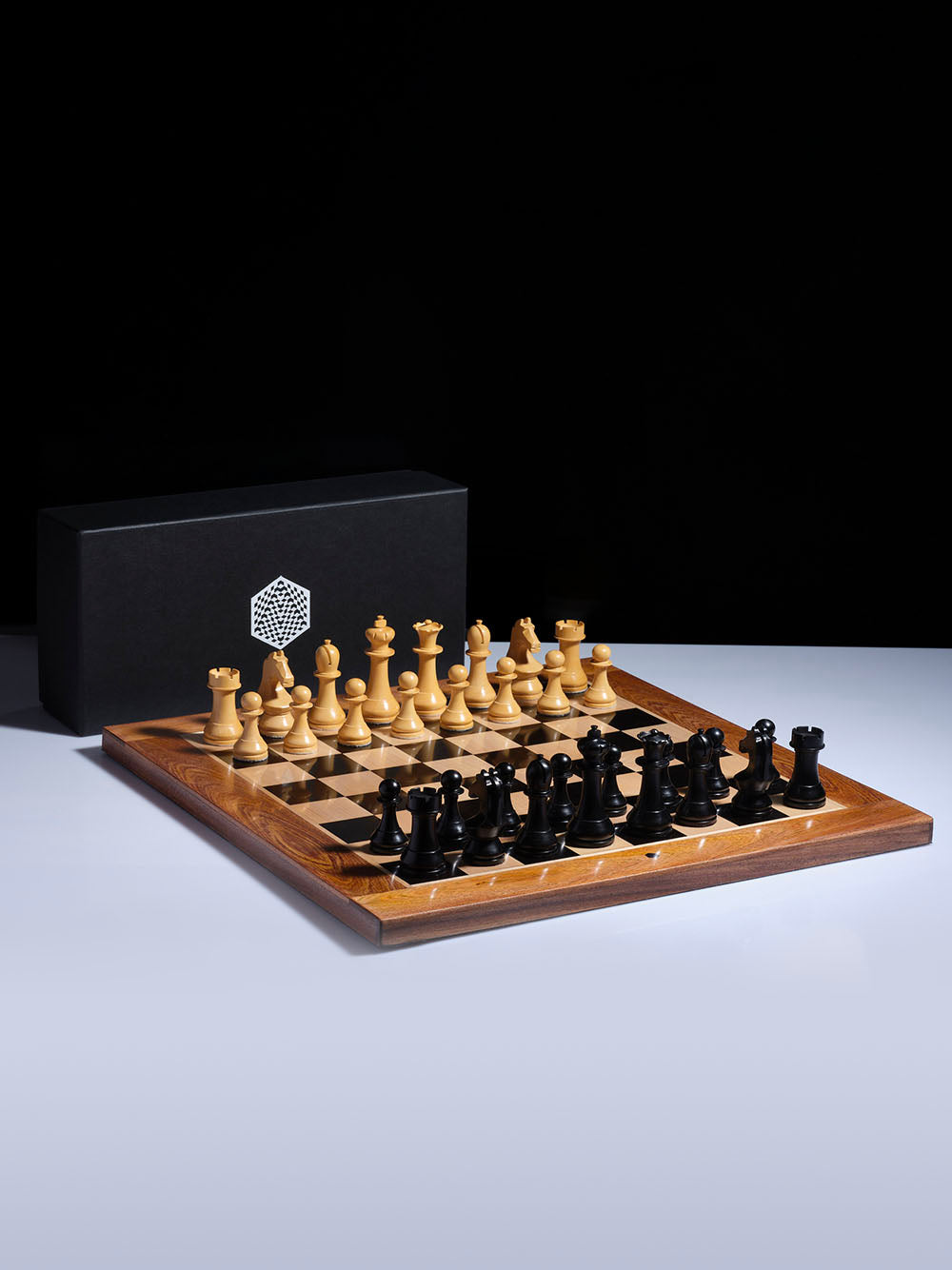
Three things decide a chess board: the square has to fit your pieces, the wood has to give the squares enough contrast, and the finish must not throw light back at you. For most sets the answer is one board: walnut or ebony with maple, 5 cm (2 in) squares, a matte finish. That is the size FIDE sets for tournaments and the size of the boards under the World Championship pieces.
Step 1. Match the square to your king
Measure your king, then read across. FIDE's equipment standards put the tournament square at 5 to 6 cm with a king of about 9.5 cm. A simpler check at home: the base of the king should cover roughly three quarters of a square, and two pawns should stand on one square without touching. More on the arithmetic in Chess set sizes, explained.
| Square | King height | Board across | Good for | Our boards |
|---|---|---|---|---|
| 4.5 cm (1.75 in) | up to 8 cm (3.1 in) | 38–45 cm | Home, a shelf, a small table, Studio pieces | Folding Board, Home Edition Walnut, Home Edition Black & White, Bauhaus |
| 5 cm (2 in) | 9.5 cm (3.75 in) | 44–50 cm | The tournament standard; the championship pieces | Walnut, Wenge, Rosewood, Ebony, Premium, Cabinet |
| 5.6–5.7 cm (2.25 in) | 9.5–11 cm (3.75–4.4 in) | 56–58 cm | Large club and collector sets | Luxury chess boards |
| 5.7 cm (2.25 in), roll-up | 9.5 cm (3.75 in) | 50 cm (20 in) | Clubs, schools, travel to tournaments | Roll-up chess boards |
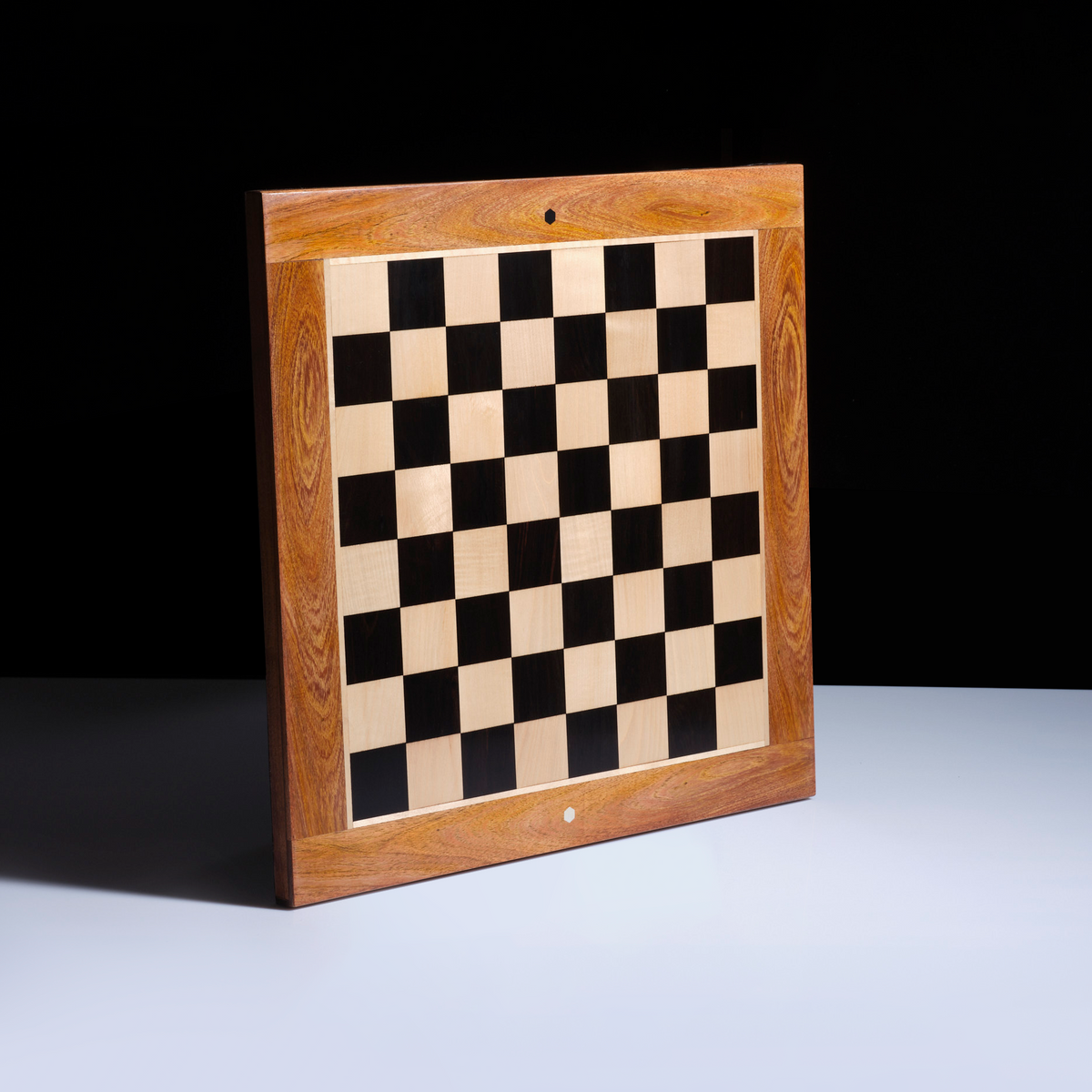
If you already own the Official World Chess Pieces or any set with a 3.75 in king, you want a 5 cm square. These are the boards made for them:


Step 2. Choose the wood by contrast, not by price
A board is read for hours, so the gap between light and dark squares matters more than how rare the wood is. Almost every good board uses maple for the light squares; the dark wood is the choice.
| Dark squares | Look | Contrast with maple | Worth knowing | Board, price |
|---|---|---|---|---|
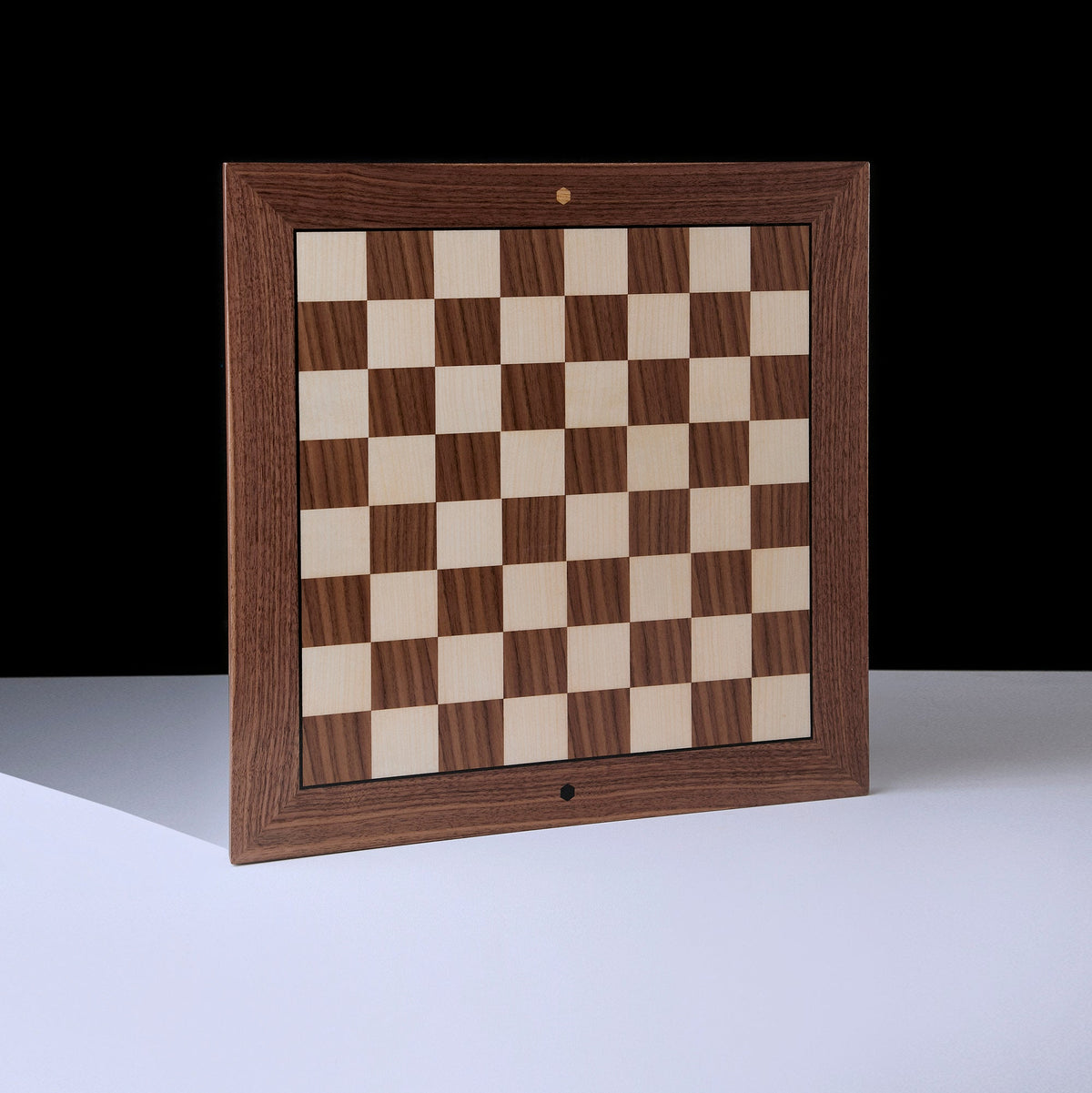
| Walnut | Warm mid-brown | Clear, easy on the eyes | The classic; the board of the World Championship cycle | Walnut Board, $229 |
| Wenge | Very dark brown, visible grain | Strong | Same championship design, darker room | Wenge Board, $209 |
| Rosewood | Deep red-brown | Strong; boxwood pieces read like ivory | Regulated wood: not shipped to the US | Rosewood Board, $259 |
| Ebony | Near black | The strongest | Heaviest (about 4.5 kg), the most formal | Ebony Board, $399 |
| Ebony in an acacia frame | Black squares, honey-coloured frame | The strongest | Matte finish; heavy, about 4.5 kg | Premium Board, $379 |
| Walnut veneer on MDF | Warm brown, very even | Clear | Lighter, stable in dry and humid rooms, lower price | Home Edition, $199 |
Solid wood and veneer both play well. Veneer over a stable core warps less when the heating goes on in winter; solid wood is heavier and lasts generations. For the whole range, see wooden chess boards, and for the woods in pieces as well as boards, chess set materials.
Step 3. Matte, coordinates, border, folding
- Finish. Matte or satin. Gloss looks good in a photo and reflects every lamp over a real game.
- Coordinates. Useful when you study from books or record games; tournament boards usually leave them off.
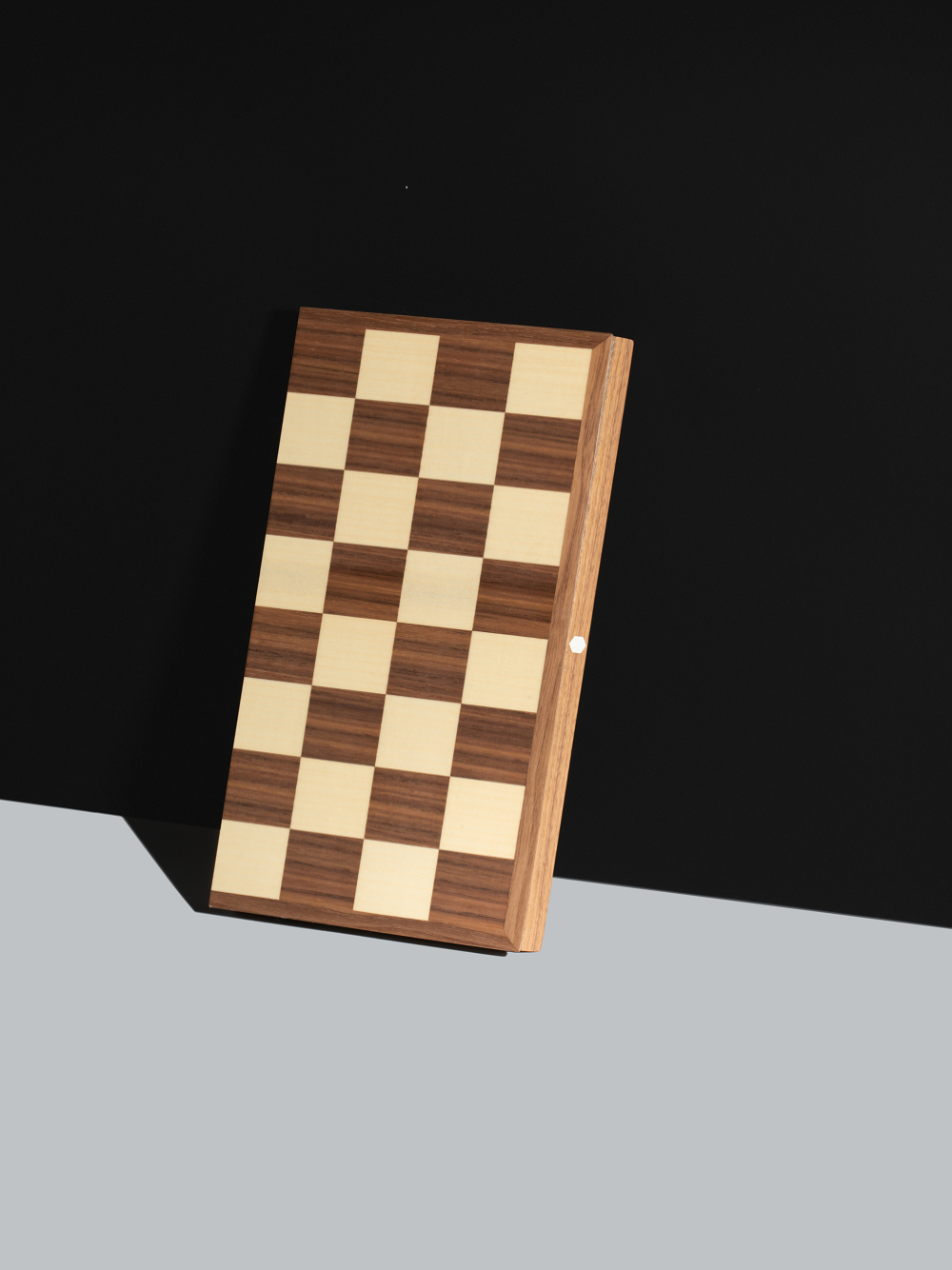
- Border. A full border frames the position and gives your hands somewhere to rest; a slim one, like the Bauhaus Board, saves table space and looks like an object, not a game.
- Folding or flat. Flat boards stay perfectly level. A folding board lives on a shelf: check that the hinge closes tight and the seam lies flat when open.
For a smaller table or a board that disappears between games:
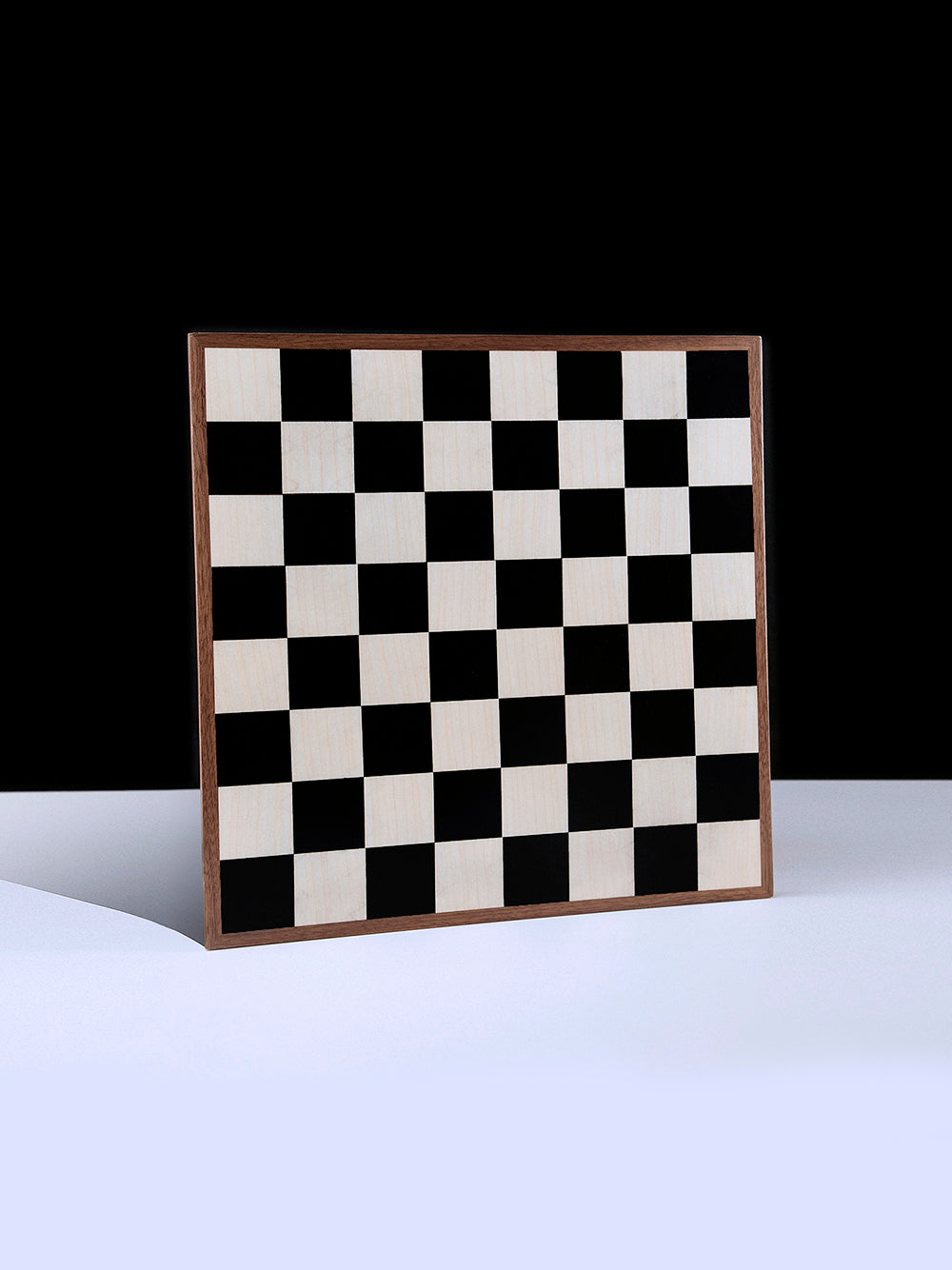
Types of chess boards at a glance
| Type | Best for | Good | Watch out for |
|---|---|---|---|
| Wood, flat | Home, club, display | Feel, weight, contrast | Gloss finishes, heat and direct sun |
| Wood or MDF, folding | Small rooms, storage | Compact, usually matte | Hinge quality, the seam |
| Vinyl or silicone roll-up | Clubs, schools, travel | Light, cheap, washable | Creases if folded; looks utilitarian |
| Magnetic travel | Trains, planes, analysis | Pieces stay put | Small squares for long games |
| Glass, marble, stone | Display | Presence | Glare, chips, slippery pieces |
| Electronic | Playing online on a real board | Records games, connects to apps | Price; check the app works on your device |
Travelling more than playing at home? See travel chess sets. Want a board that talks to an app? Electronic chess boards.
If you want one board for everything
Buy a 5 cm walnut-and-maple board with a matte finish. It fits almost every set with a 3.5–3.75 in king, it is the board players sit down to at World Chess events, and it will not look out of place in a living room. It is also the board in the official World Championship chess set, together with the pieces it was designed for.
Care
- Dust with a dry microfibre cloth; on wood, a barely damp cloth, dried at once.
- Keep it out of direct sun and away from radiators; store folding boards closed and flat.
- Felt under the pieces, nothing heavy on the surface, no glasses on the squares.
FAQ
What size chess board is standard?
For tournaments, squares of 5 to 6 cm with a king of about 9.5 cm (3.75 in), as set by FIDE. A 5 cm square board is about 44–50 cm across with its border.
Is a 20 inch chess board too big?
No, for a full-size set it is the norm: a 20 in board has 2.25 in (5.7 cm) squares, made for a 3.75 in king. For a small table or smaller pieces, choose 4.5 cm squares and a board of about 38–45 cm.
Which wood is best for a chess board?
Walnut or ebony with maple. Walnut is the warm classic; ebony gives the strongest contrast. Rosewood is beautiful but regulated, so it is harder to ship to some countries, including the US.
Which chess boards are used at the World Championship?
The World Championship cycle uses the World Chess board designed by Pentagram, with 5 cm squares, in walnut and maple; the same design comes in wenge, rosewood and ebony. You can buy it on its own as the Walnut Board or with the pieces in the official championship set.
How do I tell a good board from a bad one?
It lies flat, the squares are the size your pieces need, the light and dark squares are easy to tell apart under a lamp, and the finish does not shine. Run a hand over the joints: they should be invisible.
Related reading
- How to choose a chess set
- Chess set sizes, explained
- How to set up a chess set
- Chess set for beginners
- FIDE Handbook: Standards of Chess Equipment
All boards: chess boards · luxury chess boards · wooden chess boards.